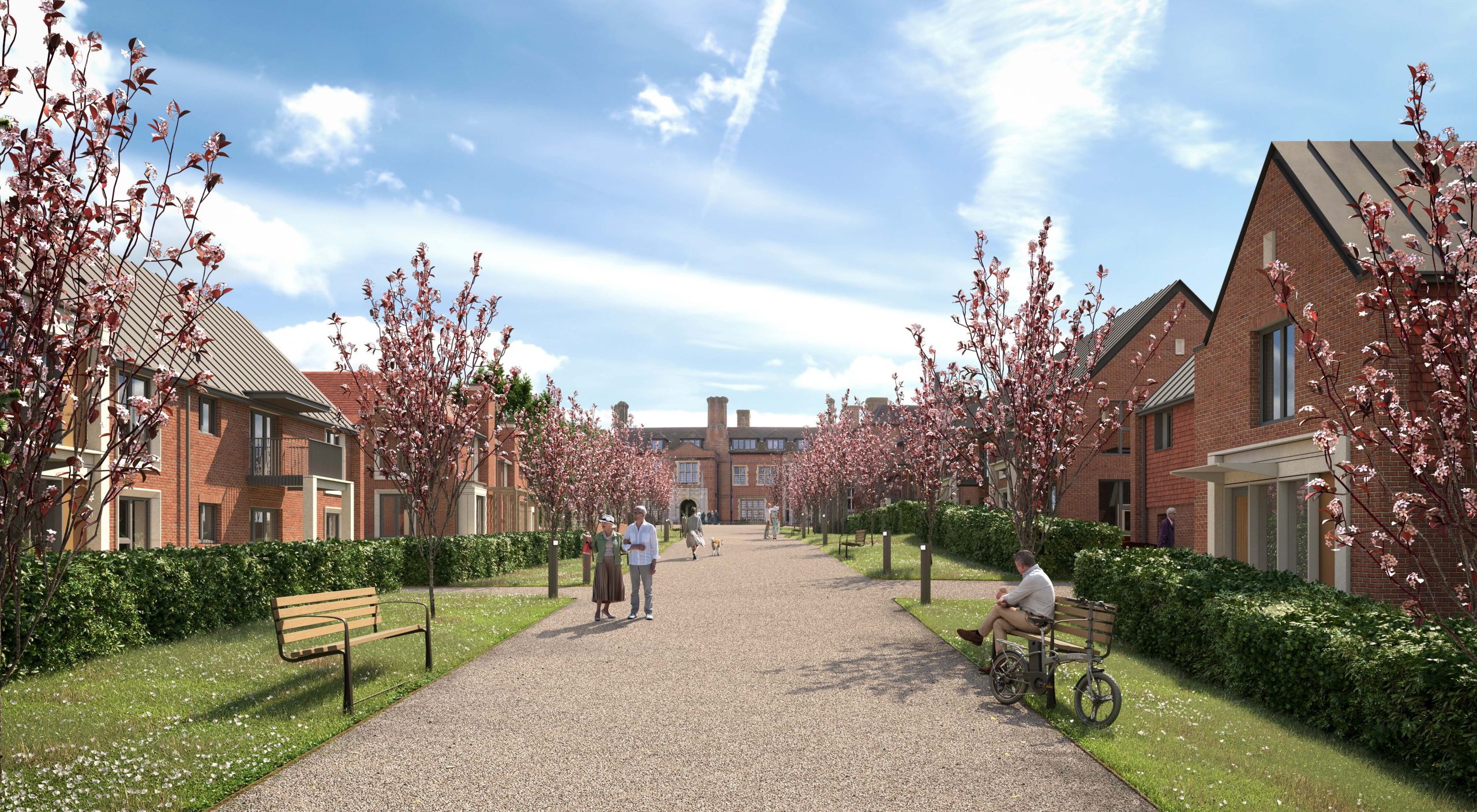
Property Market
The silver opportunity: why UK later living represents one of property's most compelling structural investment stories
The convergence of demographic certainty, chronic undersupply and rapidly evolving consumer expectations has created what many institutional investors are beginning to recognise as the most compelling structural opportunity in British property. AEM Living's Chief Investment Officer sets out the case.
The numbers are extraordinary
Start with the demographics, because they are unusually reliable as a predictive tool. The UK's population aged 65 and over currently stands at approximately 12 million. By 2040, that figure will exceed 16 million — an increase of one-third within 15 years. By 2050, more than one in four people in the United Kingdom will be over 65.
This is not a projection subject to the usual uncertainties of economic forecasting. These people are already born. Their retirement dates are largely fixed. The demand for retirement-appropriate housing is not a hypothesis; it is a structural certainty.
Against this backdrop, the supply of purpose-built retirement communities in the UK is, by any international comparison, astonishingly small. The UK currently has approximately 75,000 retirement community homes — purpose-built, amenity-rich, professionally managed villages of the kind that AEM Living operates. The comparable figure in the United States, adjusted for population, would exceed 600,000. In Australia, over 400,000. The UK, by almost any measure, is starting from scratch.
Why now?
The case for later living as an investment class is not new. What has changed in the past three to five years is the convergence of several factors that together make the present moment particularly compelling.
First, consumer awareness has reached a tipping point. The generation now entering the primary retirement living demographic — those in their late sixties and early seventies — is the first cohort to have watched their parents age through a system they found inadequate, and to have formed clear preferences about what they want instead. They have seen what retirement villages look like at their best. They want one.
Second, the planning environment, while still challenging, is increasingly supportive. National planning policy now explicitly recognises the need for a greater variety of housing for older people, and an increasing number of local authorities are including later living allocations in their Local Plans. This is a slow-moving improvement, but it is directionally significant.
Third, the institutional capital market has matured. Five years ago, the UK's later living sector was largely the preserve of specialist operators and patient family capital. Today, it attracts serious allocation from pension funds, sovereign wealth vehicles and global real estate investment managers — capital that brings both credibility and liquidity to what was previously an illiquid niche.
"The UK later living sector will grow threefold by 2040. That growth will be delivered by a small number of established operators with the land bank, operational infrastructure and capital access to execute at scale. For institutional investors seeking long-term, income-generating, socially purposeful exposure to British property, the case for later living has never been stronger."
The economics of a well-run village
For investors who have not modelled a retirement village business, the economics are frequently surprising — in a positive sense.
Occupancy is structurally high. Retirement community residents do not move frequently. Average length of tenure in an Audley or Mayfield village is measured in years, and the friction — emotional, logistical and financial — of leaving is substantial. This creates an occupancy profile that most residential and commercial asset classes would envy.
Revenue is diversified and recurring. Beyond the capital values of individual apartments, which generate development margin on new build and event fees on resale, a well-run village generates ongoing income from service charges, care fees, catering, wellness facilities and estate management. This revenue is largely non-cyclical — retirement is not deferred because of a downturn in consumer confidence.
Operational barriers to entry are high. Running a retirement village well requires CQC registration, ARCO membership, established hospitality and care recruitment pipelines, and a resident services infrastructure that takes years to build. This is not a market that a new entrant can enter cheaply or quickly. It rewards incumbents with scale.
The risk factors — and why they are manageable
No asset class is without risk, and intellectual honesty requires acknowledging the genuine challenges.
Planning risk is real. Later living schemes frequently face complex mixed-use and care planning categories that create process uncertainty. Experienced operators mitigate this through early community engagement, high design quality, and a track record of successful outcomes that builds credibility with planning authorities over time.
Care quality risk is specific to the sector. A poor CQC inspection can damage an operator's reputation and, in extreme cases, require operational intervention. This risk is best managed through investment in care governance — precisely what AEM Living addresses through its dedicated Chief Care Officer function and group-wide care quality frameworks.
Macro sensitivity is lower than many investors assume. Later living residents are, by definition, older homeowners who have typically lived through multiple property cycles. Their decision to move into a retirement community is driven by life stage, not short-term market conditions. Our sales pipelines showed remarkable resilience through the interest rate cycle of 2022–24.
The opportunity ahead
The UK later living sector will, we believe, grow threefold by 2040. That growth will be delivered by a small number of established operators with the land bank, operational infrastructure, development capability and capital access to execute at scale. AEM Living is one of those operators — and we are building accordingly.
For institutional investors seeking long-term, income-generating, socially purposeful exposure to British residential property, the case for later living has never been stronger. We would welcome the opportunity to discuss it in detail.
Robert Calloway is Chief Investment Officer at AEM Living. Investor enquiries: investors@aemliving.co.uk